Growing up, our grandfather, S.W. Stone Sr., had a Quarter Horse named Mingo. I remember him riding from his house, near 3-Way Market on the Old Manchester Highway, to our house, on Anthony Mill Road. It was about three miles and it seemed like a long way.
Our dad, S.W. Jr. had a Quarter horse, named Goldie. And later a Walking Horse, named Lady. Then when I was little, we had a Shetland pony, named, Star.
Mom, Melanie, and Sheri were better at loving and riding horses than I was. But we all enjoyed them, and cared for them.
Dad used to tell us about growing up around the family's prized Walking Horse in Cannon County.
There are several good stories about that stallion.
Here is one.
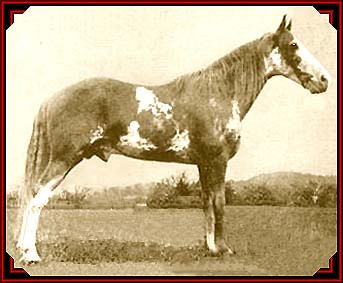
Curlee's Spotted Allen, a Tennessee Walking Horse, was born in Cannon County, TN in 1928. He is recognized and registered as #350194 in the Tennessee Walking Horse records.
Margaret Ruth Curlee is my grandmother on dad's side of the family.
On a hot summer day on the family farm in 1932, the two had an encounter that we still talk about.
Her dad, Ephriam Millard Curlee, was affectionately knows as "Big Daddy." Her mom was Jimmie White Jamerson.
Margaret was riding her horse, and carrying lunch buckets out to her daddy, and uncles. The leisurely walk across the open pasture field on the family farm was interrupted by the men shouting, and pointing. The family's walking horse stallion saw her and her horse. He broke through a gate, and got out of his barn lot. He was in a full run towards Margaret.
The stallion, born in 1928, was three and a half, or four years old at the time.
As described by my dad, the stallion was crazy, and mean. It was still around when dad was a little boy, and he and the other children were forbidden to get near it.
It didn't calm down or mellow out much in its old age. Still the stallion was something the family was known for and proud of. Curlee's Spotted Allen was a big part of their farm life.
Back to the day of the chase...
With the men shouting, and the walking horse stallion was closing in. Margaret was taking her time enjoying the day and the ride when she looked behind her to see what the fuss was about.
When she saw the stallion closing in, she calmly leaned forward, and switched her horse.
For those of you all not familiar with that term, that's applying the extra length of the leather strap from the reins to a horses neck, legs, or rump, to encourage speed. To a horse, it's a high five, and a "We finally get to run!" moment, more than any kind of punishment.
The race was on. Margaret made her getaway across the wide open field. The stallion, behind her at full speed, never caught up. To all who witnessed it, it was a spectacle to behold. Margaret circled the field and came back around to the waiting men. They shoo'd the stallion away, and caught him later.
Big Daddy, usually a serious, stoic man, was clearly proud of her, and her riding skills. Her uncles were not surprised, and quite impressed.
Margaret delivered their lunches. Then she and her horse walked back home, like nothing happened.
And that family story from a summer day, nearly a hundred years ago is still being told.
Below is a picture of Curlee's Spotted Allen, along with some information about it's parents, and descendants.
a quick Google search...
Curlee's Spotted Allen (foaled in 1928) was a foundation-era Tennessee Walking Horse and a legendary sire of spotted gaited horses. While he lived before the creation of the modern show ring championships, his pedigree boasts the absolute foundation royalty of the breed, and his direct descendants became multi-time World Grand Champions. [1, 2, 3, 4]
👑 The Famous Sire Line (Ancestors)
Curlee's Spotted Allen's immediate ancestry includes the most celebrated foundation horses in the history of the Tennessee Walking Horse: [1]
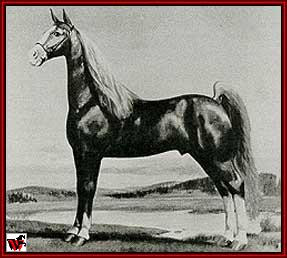
Roan Allen (Sire & Maternal Grandsire): Curlee's Spotted Allen was heavily inbred to Roan Allen (TWHBEA #F-38), who sired him out of the mare Maud Curlee (herself a Roan Allen daughter). Roan Allen is considered one of the primary building blocks of the breed.
Allan F-1 (Grandsire): The designated Foundation Sire #1 of the entire Tennessee Walking Horse registry. [1, 2, 3]
🏆 The World Grand Champions in His Line (Descendants)
Because Curlee's Spotted Allen passed down exceptional gaits and highly sought-after pinto/sabino coat patterns, his blood heavily influences elite show horses. His most legendary line runs through Spotted Alen Again (his great-grandson via Sue Lassiter): [, 2]
Spotted Alen Again: The ultimate modern champion-producer in this line. Offspring tracing directly back to Curlee's Spotted Allen through him have won over 84 World Championships and 62 Reserve World Championships across the TWHBEA, Racking Horse, and National Spotted Saddle Horse associations. [1]
Midnight Sun & Merry Go Boy Connections: In modern pedigrees, Curlee's Spotted Allen's genetics were crossed with early World Grand Champions like Midnight Sun (1945/1946 WGC) and Merry Go Boy (1947/1948 WGC) to create the ultimate combination of perfect gaits and "spotted" color. [1, 2, 3]
Ebony Masterpiece & Go Boy's Chatterbox: Descendant lines also branch out into World Grand Champions like Ebony Masterpiece and Go Boy's Chatterbox, reinforcing how deeply embedded Curlee's Spotted Allen is in elite gaited performance bloodlines. [1]
The horse has a storied history, and is listed online, and in the official records in Shelbyville, with offspring...
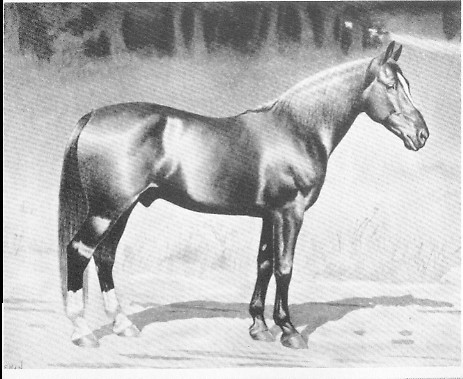
Allan F-1 (often called "Black Allan") is recognized as the premier foundation sire of the Tennessee Walking Horse, chosen in 1935 as the first entry in the breed registry (F-1) due to his ability to consistently pass down a smooth running walk gait, gentle temperament, and high style to his descendants. Though a black Standardbred-Morgan cross who was intended to be a trotter, he preferred to pace, establishing the unique, comfortable, lateral gaits that define the breed today.
Accidental Foundation Sire: Allan was despised as a racehorse because he would not trot, and he was sold many times before finding his true purpose as a riding horse and sire in Tennessee.
The "Running Walk" Gene: His progeny were exceptionally easy-gaited and possessed a natural "running walk" and a specialized gliding gait that was described as feeling like a "family rocking chair," making them popular with farmers, doctors, and plantation owners.
Pre-potent Influence: Although he died in 1910, 25 years before the breed association was founded, over 10,000 of the first 11,800 registered Tennessee Walking Horses traced back to him, cementing his status as the most important influence in the breed's history.
Tennessee Walking Horse Foundation Sire
Allan F-1 (often called "Black Allan") is recognized as the premier foundation sire of the Tennessee Walking Horse, chosen in 1935 as the first entry in the breed registry (F-1) due to his ability to consistently pass down a smooth running walk gait, gentle temperament, and high style to his descendants. Though a black Standardbred-Morgan cross who was intended to be a trotter, he preferred to pace, establishing the unique, comfortable, lateral gaits that define the breed today.
Foaled September, 1886
SireAllandorf (Standardbred)
DamMaggie Marshall (Morgan)
Key Progeny Roab Allen (F-38), Hunter's Allen (F-*10)
Allan F-1
Tennessee Walking Horse Foundation Sire
Allan F-1 (often called "Black Allan") is recognized as the premier foundation sire of the Tennessee Walking Horse, chosen in 1935 as the first entry in the breed registry (F-1) due to his ability to consistently pass down a smooth running walk gait, gentle temperament, and high style to his descendants. Though a black Standardbred-Morgan cross who was intended to be a trotter, he preferred to pace, establishing the unique, comfortable, lateral gaits that define the breed today.
Accidental Foundation Sire: Allan was despised as a racehorse because he would not trot, and he was sold many times before finding his true purpose as a riding horse and sire in Tennessee.
The "Running Walk" Gene: His progeny were exceptionally easy-gaited and possessed a natural "running walk" and a specialized gliding gait that was described as feeling like a "family rocking chair," making them popular with farmers, doctors, and plantation owners.
Pre-potent Influence: Although he died in 1910, 25 years before the breed association was founded, over 10,000 of the first 11,800 registered Tennessee Walking Horses traced back to him, cementing his status as the most important influence in the breed's history.